

David Ingles David Ingles is a part-time research fellow at the Australia Institute. He has worked for several Commonwealth departments, including Social Security, EPAC and FACSIA and as a policy adviser to Ministers Grimes (Social Security) and Willis (Employment and Industrial Relations) in the Hawke Government. His specialty is public finance. He has a degree in Economics (Sydney University 1975), a Master of Economics (Sydney University 1981) and a PhD in Public Policy (ANU 2001).
DAVID INGLES , JOSH FEAR | MONDAY, 4 FEB 2013 The existing superannuation system is built on a contradictory notion of the way people make financial decisions. On the one hand, the concept of compulsory superannuation suggests that Australians are myopic, irrational and have to be forced to save. ... Read more PAGE: 1 |


Latest News
AustralianSuper rolls out new investment data platform
|AustralianSuper has implemented a new investment data platform designed to improve portfolio oversight, risk management and decision-making as the superannuation fund expands its global operations.
The risks keeping APRA's new deputy chair up at night
The Australian Prudential Regulation Authority's (APRA) new deputy chair David Bradbury said the risks that keep him awake at night are those with the potential to threaten the financial stability of the super system or cause catastrophic losses for members.
Early access undermines super's purpose: Mulino
Assistant treasurer Daniel Mulino took an aim at plans by the opposition to let Australians dip into their super early, stating weakening preservation would undermine intergenerational protections and hurt the most vulnerable.
ART rolls out new investment technology platform
Australian Retirement Trust (ART) has launched a new portfolio management system as the $375 billion superannuation fund strengthens its investment capabilities targeting further growth.

Further Reading
Cover Story
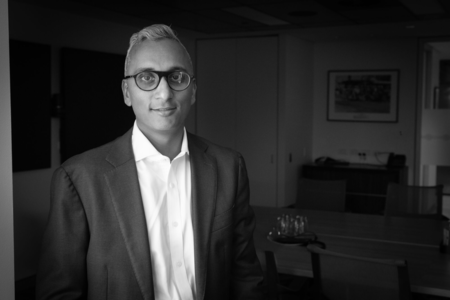
In the right place
VASYL NAIR
CHIEF EXECUTIVE OFFICER
TEAM SUPERANNUATION FUND
CHIEF EXECUTIVE OFFICER
TEAM SUPERANNUATION FUND
Team Super chief executive Vasyl Nair reflects on the winding path from law to superannuation, the people who shaped him and the changing role of super funds in people's lives. Vinny Vucago writes.
Expert Feed
GP Stakes: A new source of diversification and yield for investors
Talk to investors about private markets right now and it quickly comes back to the same point of frustration: cash isn't coming back fast enough.
GP Stakes: A new source of diversification and yield for investors
Talk to investors about private markets right now and it quickly comes back to the same point of frustration: cash isn't coming back fast enough.
Diamonds in the dust: Finding value beyond big tech
While mid-sized companies aren't flavour of the month, we think some lower price companies represent great investment opportunities.
Diamonds in the dust: Finding value beyond big tech
While mid-sized companies aren't flavour of the month, we think some lower price companies represent great investment opportunities.