

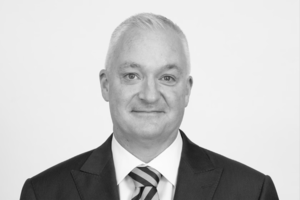
In the right place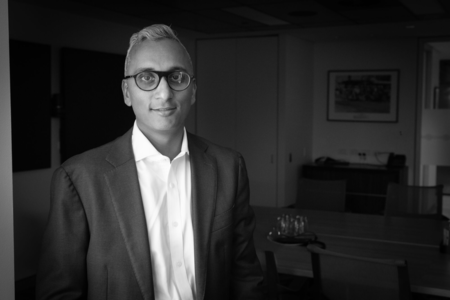 Team Super chief executive Vasyl Nair reflects on the winding path from law to superannuation, the people who shaped him and the changing role of super funds in people's lives. Vinny Vucago writes. There are three photographs on Vasyl Nair's office wall. One is Sydney. One is Suva. The other is Vancouver. They mark three places that, in different ways, have shaped the Team Super chief executive. Once we have the legislation and once the industry has had the opportunity to have input into that, we'll be very alive to those risks. Sydney is where Nair was born and raised. Suva is where his parents grew up. Vancouver is where his parents eventually settled after leaving Fiji.The photographs are more than decoration. Together, they form a small map of the influences that sit behind a career spanning law, banking, risk, strategy and now, the leadership of a $26 billion profit-to-member superannuation fund. "They have a really strong influence on how I think about inclusion, diversity, equity and fairness," Nair says. It is a thread that runs quietly through the way Nair describes his career. It was there in his decision to study law. It followed him into financial services and, eventually, into industry superannuation. His route to the CEO office was not mapped out from the beginning. "I don't think I'd ever envisaged I'd have the opportunity to lead an industry superannuation fund earlier on in my career," he says. "I have had a fortunate career, and a lot of it is just down to circumstance." Nair began his career in law, where he developed an ability to work through large amounts of information and make sense of complicated structures. It proved useful training for superannuation, an industry where the legal architecture behind a fund can be as critical as the investment decisions members see. The training also gave him an understanding of trusts and legal concepts that remain relevant to running a superannuation fund. But there was another reason law resonated with him. "There's a justice dimension to it as well," he says. "For me, industry superannuation is working at the intersection of people and purpose." Nair joined Team Super in July 2016 (it was called Mine Super at the time) as chief strategy officer and has since held a succession of senior leadership roles, including chief risk officer and deputy chief executive, before becoming chief executive. He also served as interim CEO in 2021 before being appointed permanently later that year. The progression gave him a tour of the fund from several different angles. His strategy role covered areas including digital, people and human resources, marketing and product, while his time as chief risk officer brought a different perspective as regulatory expectations and compliance obligations intensified. As deputy chief executive, he gained a broader enterprise view and greater exposure to the board. "Each of those roles has been very helpful training for the role I've held for the last five years," he says. The distinction matters because Nair's tenure has coincided with one of the more consequential periods in the fund's recent history. One of the major decisions was the divestment of the fund's administration capability, moving away from a predominantly insourced model. The question was ultimately about where resources could have the greatest impact. "As a medium-sized fund, we're a $26 billion fund looking after 150,000 members, we have to be very deliberate about where we invest our time and effort, and how we get the best out of the resources we deploy," he says. "That's what led us to the decision to outsource our predominantly insourced administration model. The road to Team Super It was one piece of a much larger transformation. Team Super was also preparing for the merger of Mine Super and TWUSUPER, a process that had been building for almost three years before the two funds formally came together in March 2025. Mine Super had rebranded as Team Super earlier that year, bringing the combined fund's membership to about 150,000 and its funds under management to around $26 billion. The merger also sat alongside a broader overhaul of the fund's infrastructure, including moving to a new custodian, re-platforming and changes to its product offering. For members, much of that work happened behind the scenes. For Nair and the executive team, it meant navigating a complicated and labour-intensive roadmap. "That was a very challenging period in my career," he says. There is a temptation with mergers to treat the completion date as the ending. For Nair, it was closer to the point at which the harder work of becoming one organisation could begin. Fifteen months after the merger, he says the fund is still building its cohesiveness and beginning to see momentum. "I had an incredibly supported board, great team, and we... have come out of the back of it, I think, stronger than ever," he says. For Nair, the reason to go through that disruption comes back to what the fund is ultimately there to do. Scale matters, he says, because a larger fund can potentially deliver better outcomes for members. But size is not the purpose itself. "I think additional scale can help us deliver better member outcomes." That context is important in an industry where consolidation has become an increasingly familiar part of the landscape. For Nair, the argument for industry superannuation is not simply that larger funds can spread costs across more members. It is that the structure begins with a different question. "Industry superannuation is more about its strength and its purpose, and the steadfast focus on delivering better member outcomes," he says. There is something almost disarmingly simple about the philosophy. Nair says he finds it refreshing that conversations within the sector can return to the same point: the member. "I think the hyper-focus on member outcomes is something that is really refreshing," he says. It is also the lens through which he views the next major change facing the sector: advice. The fast lane to digital advice The government's Delivering Better Financial Outcomes reforms are set to create a New Class of Adviser within APRA-regulated superannuation funds and life insurers, allowing funds to provide a broader form of scaled advice. The reforms come alongside stronger consumer protections, including obligations around advice fee deductions and safeguards intended to prevent sales-driven advice models. For Nair, the opportunity is significant because advice remains one of the least accessible parts of the financial system. "I think the opportunity to broaden access to advice is really important," he says. He describes advice as one of the most underpenetrated financial products in Australia, and believes affordable, personalised support will become increasingly crucial as members navigate retirement. Team Super already has an internal Australian Financial Services licence and comprehensive advisers, while its leadership team includes a chief retirement officer. Nair also brings experience from Commonwealth Bank, where he worked within a large advice licensee. That background gives him an appreciation of both the opportunity and the risks. At the time of the interview, the detailed legislation for the New Class of Adviser had not yet been released. Nair says the fund will wait for that detail before firming its position, but there is little ambiguity about the responsibility he sees coming with the new regime. "Once we have the legislation and once the industry has had the opportunity to have input into that, we'll be very alive to those risks," he says. "And we will make sure that we manage and mitigate those risks appropriately." The balance is becoming increasingly pivotal as super funds move closer to the financial lives of their members. The government's reforms are designed around a similar tension: making advice easier to access while strengthening protections around the way it is delivered. Nair sees digital advice as another part of that shift. "Digital advice is currently critical and will continue to become more critical over time," he says. For Team Super, the attraction is not simply technology for its own sake. Digital tools offer a way to make advice more accessible and scalable, while allowing members to take a more self-directed role in their financial decisions. That matters in a system where the need for advice is not necessarily confined to those who can afford a traditional financial planning relationship. Driven by people and purpose Asked what he sees as the biggest challenge for the industry over the next decade or two, he does not point to a single problem. Instead, he describes a confluence of pressures. The first is Australia's ageing population and the increasingly complex advice needs and preferences that will come with it. The second is the growing scrutiny and accountability being placed on boards and executive teams, including through regulatory frameworks such as CPS 230 and the Financial Accountability Regime. The third is the increasing competitive tension between established funds and new entrants. It is the interaction between those forces, rather than any one of them alone, that Nair expects will reshape superannuation. For a chief executive officer who has spent much of his career moving between strategy, risk and operations, perhaps that is an unsurprising way to see the industry. Problems rarely arrive neatly separated. Neither, for Nair, does leadership. His motivation is less about the title than the people around it. "I've always been motivated by people and purpose," he says. His ambition for Team Super is to be there for members throughout retirement, delivering strong outcomes when things go according to plan, but also providing support when life becomes less predictable. Insurance is part of that equation. Death, disablement, injury and other moments of crisis are not abstract risks for members. They are the points at which the promise contained inside a superannuation account becomes more tangible. For Nair, that is part of what makes the work meaningful. He credits the people around him as much as he does any individual career milestone. He says he has "never had a bad leader" and has learned something from the exceptional leaders he has worked with. What remains from those experiences is less a single management philosophy than an imprint. It is the idea of contributing, of putting something good back into the industry, and of doing what is right because it is right. The long way home That thinking is connected to the way Nair sees his own background. His parents who grew up in Fiji before moving overseas and eventually settling in Canada. Nair was born in Australia and holds Canadian citizenship. He remains connected to both sides of that history, including through the Australian Canadian Chamber of Commerce and a Fijian professional network spanning asset and wealth management and superannuation. It's a story he humbly describes as little different from many other immigrant stories. However, that humility does not minimise the grounding ease and earnest conviction in which Nair approaches his leadership. "I am a first-generation Australian, my parents are from Suva, they migrated through Vancouver," he says. "It does really influence who I am and how I see the world and how I contribute at work." Nair does not describe culture as something separate from his professional life. It informs the way he thinks about inclusion and fairness, and the way he approaches the people around him. At home, Nair and his father, who is also a chief executive, trade notes on work and responsibility between the usual drift of family conversation, a quiet, recurring scene that has done more to shape his sense of leadership than any course or mentoring program, an education delivered, almost incidentally, over dinner. The same thinking has extended into his own family. Nair smiles as he expresses that becoming a parent represents the biggest step change in his working career. "It was the best thing that ever happened to me," he says. Having a daughter forced him to reconsider the way he allocated his time, placing greater weight on relationships, health and family alongside work. He credits his wife for being hugely supportive, while his parents, who live nearby, remain a significant part of both his and his daughter's life. There is also a generational shift taking place. His daughter is growing up differently from the way he did. He grew up differently from his own parents. What connects those generations, he says, are conversations about purpose, community and helping and supporting others. His daughter, he says, has a big personality. When asked what he considers his greatest achievement, there is no hesitation. "She's top of the absolute top of the list, and there's daylight between that and second place," he says. It is a striking answer from someone whose career contains plenty of conventional markers of achievement: senior banking roles, a legal career, board exposure, executive leadership and the stewardship of billions of dollars in retirement savings. But it returns the story to the same place Nair has been pointing towards throughout the conversation. The phrase "people and purpose" can sound like corporate shorthand, convenient words neatly packed into strategic plans and member propositions. But in Nair's telling, it loses its gloss and takes on a quieter, more human weight. Perhaps that is why his advice to his younger self comes without pretence: "Be a good person and do good things." It is an unusually plain landing place for a life that swept through much hard work and dedication before arriving here. On the wall, three photographs hold their ground: Sydney, Suva, and Vancouver. Three frames, three cities, anchoring Nair's past, present and future." fs
 Delivering digitalFirst State Super recently created the senior executive position of chief digital officer. It marks a significant moment for the $53 billion not-for-profit ...  Age of activismUniSuper's recent, very public opposition to the Westfield restructure illustrated at least one thing: super funds have clout. Gone are the days when ...  Rethinking retirementChallenger's Jeremy Cooper talks to FS Super about retirement income, challenging some dearly-held beliefs about the drawdown phase of superannuation.  Above the restDamian Hill, chief executive of $27 billion REST Industry Super, shares his views on how the fund will continue to deliver better-than-average investment ...  Leader with latitudeFrom a trickle to a trillion dollar industry, superannuation has become a force to reckon with. FS Super talks to leading superannuation CIOs and COOs ...  Trillion-dollar question$1.3 trillion worth of responsibility does not leave a lot of room for error, and with nothing but more volatility ahead it is only right that the chief ... |


Latest News
CareSuper rejigs beneficiary nominations, investment options
Brighter Super expands indexed investment suite
Super payments doubled since July 1: ASFA
Two in three Aussies support super top-up for carers

Cover Story
In the right place
CHIEF EXECUTIVE OFFICER
TEAM SUPERANNUATION FUND
Expert Feed
Diamonds in the dust: Finding value beyond big tech

We are not the AI referee: Picking winners, not fights
Developers go bust - that's not abnormal. Being unprepared is.